In 2026, the landscape of online payments has shifted dramatically. While giants like Stripe continue to dominate the low-risk e-commerce sector, high-risk businesses—ranging from digital goods and crypto services to adult content and IPTV—are finding it increasingly difficult to maintain stable merchant accounts.
If you operate in a high-risk industry, you've likely faced the nightmare of sudden account freezes, held funds, or outright rejections. This article compares the industry standard, Stripe, against the rising challenger built specifically for high-risk needs: Chain2Pay.
1. Introduction: The High-Risk Dilemma
The core tension for a high-risk merchant is simple: you need the conversion rate of a mainstream card processor, but none of the mainstream processors want your business. Stripe is the clearest example of that mismatch.
Chain2Pay was built to resolve that tension by combining traditional card acceptance with non-custodial crypto settlement—so you get Stripe-like checkout UX with none of the Stripe-like account risk.
2. What Is Stripe? (Pros & Cons)
Stripe is arguably the most popular payment processor in the world. Known for its developer-friendly API and sleek checkout experience, it powers millions of businesses. For standard e-commerce (like a Shopify t-shirt store), it is an excellent choice.
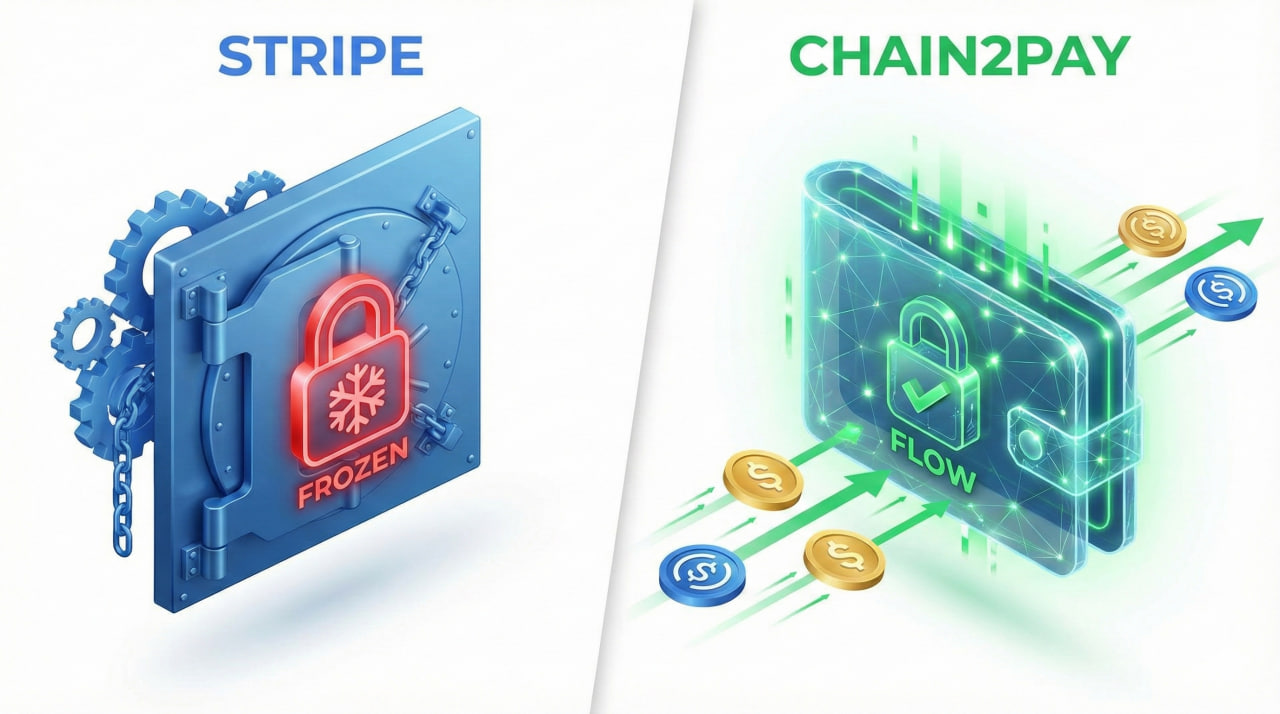
However, Stripe's approval process is automated. This means you can get approved instantly, start processing payments, and then weeks later be subjected to a manual review that flags your business as "unsupported." This leads to immediate termination and funds being held for 180 days.
Where Stripe Excels
- Best-in-class developer experience and documentation.
- Excellent for low-risk SaaS, physical goods, and marketplaces.
- Deep ecosystem: Radar, Billing, Connect, Tax, Identity.
Where Stripe Fails High-Risk
- Strict prohibited-business policies (gambling, adult, IPTV, many crypto flows).
- Retroactive account freezes after volume scales.
- 180-day rolling reserves on disputed accounts.
3. What Is Chain2Pay? (The High-Risk Specialist)
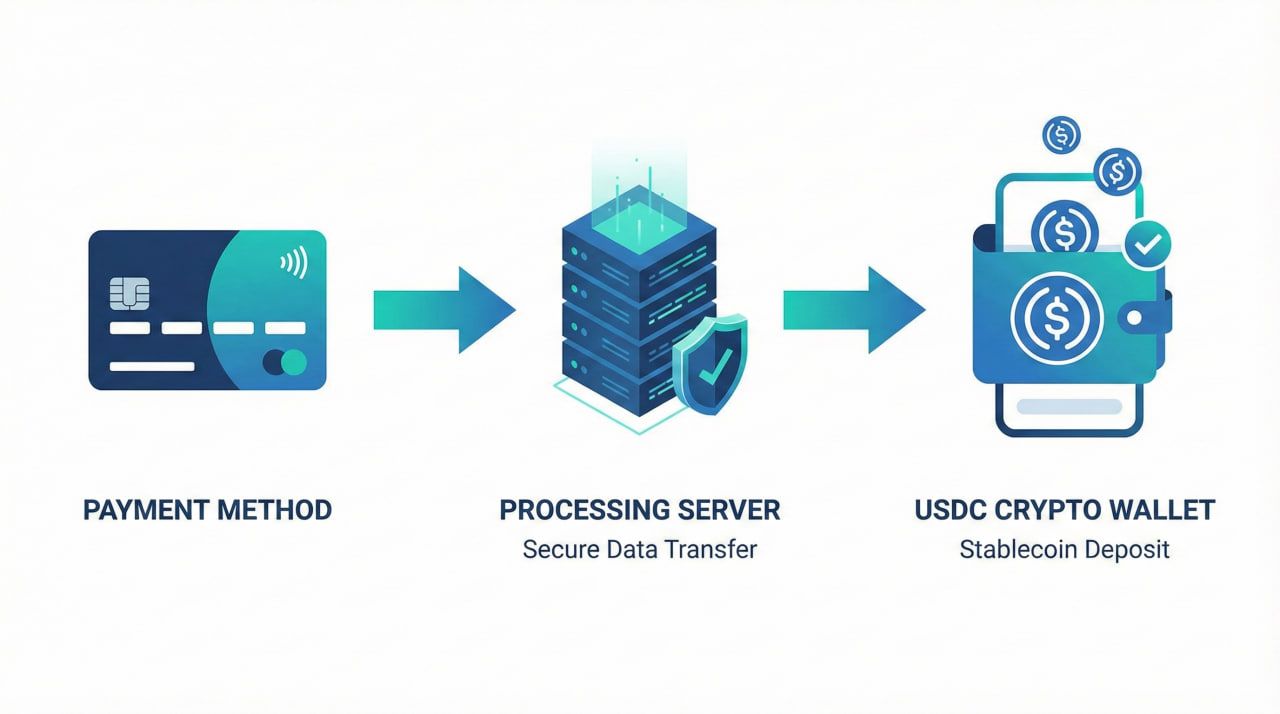
Chain2Pay is a card-to-crypto payment gateway designed specifically to solve the banking bottlenecks faced by high-risk merchants. Unlike Stripe, which relies on traditional banking rails that are hostile to high-risk industries, Chain2Pay acts as a bridge.
We allow your customers to pay with Visa, Mastercard, Apple Pay, and Google Pay just like they would on Stripe. However, instead of the funds settling into a bank account (which can be frozen), the system automatically converts the payment into USDC (crypto) and sends it directly to your non-custodial wallet.
Sample API Call
const response = await fetch(
  'https://chain2pay.cloud/api/v2/payments',
  {
    method: 'POST',
    headers: {
      'Content-Type': 'application/json',
      'x-api-key': 'sk_live_...'
    },
    body: JSON.stringify({
      amount: 49.99,
      currency: 'USD',
      merchant_wallet: '0xYourWalletAddress...',
      customer_email: 'customer@example.com',
      callback_url: 'https://your-site.com/webhooks/payment'
    })
  }
);

const { payment_url } = await response.json();
// Redirect customer to payment_url4. Stripe vs Chain2Pay: Feature Comparison
Here is a direct side-by-side comparison of the two platforms based on critical factors for high-risk merchants.
Target Audience
- Stripe: Low-risk, general e-commerce.
- Chain2Pay: High-risk, digital goods, crypto, gaming, adult.
Accepts High-Risk?
- Stripe: No — strictly prohibited.
- Chain2Pay: Yes — specialized for it.
Settlement Method & Time
- Stripe: Bank transfer (fiat), 2–7 business days on a rolling basis.
- Chain2Pay: Crypto wallet (USDC), instant / minutes.
Chargeback Protection
- Stripe: Basic — merchant is liable for most disputes.
- Chain2Pay: No chargebacks at the wallet layer — settlement is final.
Account Stability & KYC
- Stripe: Low stability (risk of freeze), strict business verification.
- Chain2Pay: High stability (non-custodial), minimal KYC for the merchant.
5. Why Stripe Is Risky for Your Business
Using Stripe for a business like IPTV, CBD, adult content, or crypto services is a ticking time bomb. Their Terms of Service explicitly prohibit these categories. You might fly under the radar for a few weeks, but their AI-driven risk algorithms will eventually catch up.
"The most dangerous day for a high-risk merchant on Stripe is the day they scale. As soon as your volume increases, the risk team investigates, and your funds are frozen."
The failure mode is consistent: you grow, you trip a threshold, your account is reviewed, and you lose both your processor and 90–180 days of working capital at the same time.
6. When Chain2Pay Is the Better Alternative
If you need a Stripe alternative for high-risk business, Chain2Pay is the superior choice in the following scenarios:
- You lack traditional banking: You want to be paid in crypto (USDC) to avoid bank account closures.
- You sell intangible goods: Game keys, software, courses, or services where chargeback fraud is common. Chain2Pay eliminates friendly fraud liability.
- You need speed: You cannot afford to wait 7 days for your money. You need liquidity now to pay suppliers or ads.
- You operate globally: You accept customers from 190+ countries without worrying about cross-border fees or blocked regions.
7. Frequently Asked Questions
Is Chain2Pay legal/compliant?
Yes. Chain2Pay operates as a technical gateway connecting customers to licensed crypto on-ramps. We handle the technical integration, while our partners handle the fiat processing compliance.
How do I integrate Chain2Pay?
We offer a plug-and-play WooCommerce plugin, a WHMCS module, and a comprehensive REST API for custom websites. You can start accepting payments in minutes.
What fees does Chain2Pay charge?
Our model is competitive with high-risk standards, but with zero hidden fees. There are no monthly fees, no setup fees, and no chargeback fees. You only pay a transaction fee when you make a sale.
Can I use both Stripe and Chain2Pay?
Yes. Many merchants keep Stripe for their low-risk product lines and route high-risk or international traffic through Chain2Pay. The two can coexist at checkout.
8. Conclusion
Choosing between Stripe vs Chain2Pay comes down to your business model. If you sell t-shirts and have low risk, stick with Stripe. But if you are in the high-risk sector, Stripe is not a partner—it's a liability.
Chain2Pay offers the freedom, security, and speed that modern digital entrepreneurs need. Don't wait for the ban hammer to drop. Switch to a payment gateway that actually wants your business.