
For an established PSP, an industry-vertical platform, or a high-volume aggregator, building "your own" payment gateway used to mean 12-24 months of work and 7-figure investment: card-acquirer negotiations, PCI-DSS Level 1 certification, fraud engine, settlement reconciliation, dispute handling, merchant onboarding, dashboard, API, plugins. Most teams that started never finished.
A modern white-label payment gateway compresses all of that into a single commercial relationship. You get the surface (your brand, your domain, your fees, your settlement wallet) and the gateway provides the substrate (acquiring, compliance, fraud, settlement). For high-risk verticals, this is the only realistic way to ship a branded payment product before competitors do.
1. Introduction: The White-Label Opportunity
High-risk payments is one of the few SaaS categories where being late costs more than being wrong. The merchants you want to onboard are getting banned every week by Stripe and PayPal; whoever shows up with a working alternative captures the relationship. Building from scratch loses you 12-24 months while competitors capture the market. White-labelling lets you ship in 5-14 days.
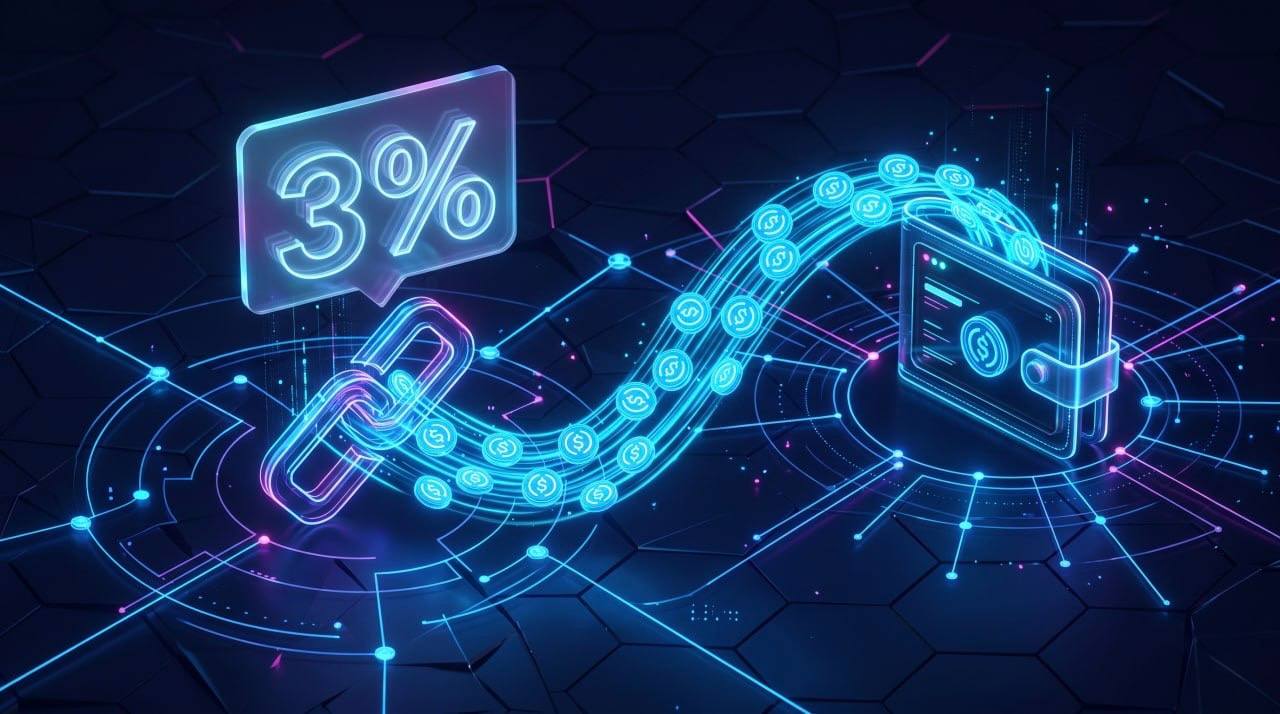
The economics are also dramatically better. A typical white-label commercial structure looks like this: Chain2Pay charges you a wholesale rate (e.g. 2.0%); you charge your merchants a retail rate (e.g. 5.0%). The 3% spread is your margin, scaling linearly with the volume you route. With $1M/month in processed volume that's $30K/month in pure margin without ever touching a card-acquirer contract.
2. What Is a White-Label Payment Gateway?
A white-label payment gateway is a payment infrastructure platform that an operator rebrands and resells as their own. From the end-customer's perspective the gateway is the operator's product — same brand, same domain, same support channel. From the operator's perspective the underlying gateway handles all the heavy lifting: card acquiring, fraud screening, settlement, compliance, payouts.
The split of responsibilities is structural:
- Operator (you) handles: merchant onboarding, vertical-specific terms of service, customer support, branding, pricing, marketing, optional treasury/payout customization.
- Gateway (Chain2Pay) handles: card-acquirer relationships, PCI compliance, fraud engine, 3D Secure, dispute infrastructure, settlement reconciliation, regulatory reporting on the acquiring side.
This is a clean separation of concerns. The operator's competitive advantage (vertical expertise, merchant relationships, brand) stays with the operator. The gateway's competitive advantage (acquirer relationships, regulatory infrastructure, fraud data) stays with the gateway.
3. Who Actually Needs a White-Label Gateway
Not every business needs a white-label. If you're a single merchant accepting card payments for your own e-commerce store, the standard Chain2Pay account is enough. White-labelling makes sense for three audiences:
1. PSPs & Aggregators
You already have merchant relationships and want to add high-risk card processing to your portfolio without building card-acquiring infrastructure. White-labelling lets you launch a branded high-risk product in days, charge a retail rate, and pocket the spread vs the gateway's wholesale rate.
2. Vertical Platforms
You operate a SaaS platform serving a specific high-risk vertical (IPTV panels, casino software providers, adult tube networks, e-commerce stacks). Adding native payments to your platform — under your brand, on your domain — turns your platform into the default payment processor for every customer you onboard. See for example the IPTV stack pattern in our IPTV gateway guide or the casino-software pattern in casino payment gateway.
3. Multi-Merchant Consultancies
You manage payments for multiple high-risk merchants — typically as part of a broader consulting or growth engagement. A white-label gateway gives you a single back-office for all your clients, with branded reporting, custom fees per client, and a unified dashboard. Compared to managing 10 different Chain2Pay accounts, a white-label collapses all of that into one operator-level admin.
4. Build vs Buy: The Real Numbers
The build-vs-buy decision for a payment gateway is one of the cleanest in fintech. Here's the actual cost breakdown for the "build" path:
- Card acquirer relationships: 6-12 months of negotiation per acquirer. Need 3-5 acquirers for redundancy.
- PCI DSS Level 1 certification: $50K-$200K initial, $30K-$100K annual renewal.
- Fraud engine: $0.05-$0.15 per transaction (3rd party) or $500K+ build cost (in-house ML).
- Settlement reconciliation: 2-3 senior engineers, 6 months.
- Dispute / chargeback infrastructure: 1-2 senior engineers, 3 months, plus ongoing operational team.
- Merchant onboarding + KYC: 1-2 senior engineers, 3 months, plus compliance / legal review.
- Dashboard, API, plugins, webhooks: 3-4 engineers, 6-12 months.
- Regulatory licensing (where applicable): 6-18 months, $100K-$1M legal fees.
Realistic total: 18-30 months, $2M-$5M, with a non-trivial probability of never shipping.
The "buy" path with a white-label is 5-14 days, $0 setup (commercial spread applies post-revenue), no PCI scope, no acquirer negotiations, no fraud-engine R&D. You ship the same product faster, cheaper, and with strictly better economics for any volume below ~$50M/month — which is essentially everyone.
5. Architecture of a White-Label Gateway

A modern white-label gateway has five layers, each of which the gateway must expose cleanly to the operator:
- Tenant / operator layer: isolated namespace per operator, with its own API keys, webhooks, branding, and fee configuration.
- Custom domain layer: hosted checkout served from
checkout.your-domain.cominstead ofchain2pay.cloud. SSL certificate provisioned automatically via Cloudflare for SaaS. - API layer: REST API with operator-scoped keys; the operator programmatically generates payment links, pulls reporting, and wires up webhooks. Plug your own merchant onboarding stack on top — your merchants never touch Chain2Pay directly.
- Settlement layer: the merchant share of every payment lands on the operator's
merchant_wallet, ready to be redistributed downstream however the operator's vertical demands. - Reporting / admin layer: operator-level dashboard with consolidated volume across all routed payments, branded as the operator.
6. How the Chain2Pay White-Label Works

The Chain2Pay white-label maps cleanly onto the architecture above. The high-level flow:
- Provision tenant: Chain2Pay creates a tenant record with your operator name, slug and contact email.
- Issue API keys: live + sandbox API keys are generated, encrypted at rest, revealable to the operator on demand via password challenge.
- Configure custom domain: you point
checkout.your-domain.comCNAME to a Cloudflare for SaaS hostname; SSL is provisioned automatically. - Brand the hosted checkout: upload logo, set primary color, footer text, terms link. The full Chain2Pay branding disappears from every customer-facing surface.
- Configure your settlement wallet: a single
PATCH /api/wl/v1/tenant/me/walletssets yourmerchant_wallet(where the merchant share of every payment lands) and optionally yourpartner_affiliate_wallet(where your spread lands when you take a cut). Wallets are tenant-scoped; you rotate them independently of admin involvement. - Generate payment links: each link is created via the operator's tenant-scoped API key and served from your custom domain. Funds always settle to the configured wallets — no per-payment routing parameter to manage.
- Receive HMAC-signed tenant webhooks: Chain2Pay POSTs a JSON payload to your registered URL on each settled order, with
x-chain2pay-event: payment.completedand anx-chain2pay-signatureheader (HMAC-SHA256 of the raw body, signed with your tenant secret). Up to 4 delivery attempts with exponential backoff. - Settle to your Polygon wallet: the merchant share of every order lands on your
merchant_wallet, the partner share (when configured) onpartner_affiliate_wallet, and Chain2Pay retains its platform fee internally. Redistribute downstream however your business model demands.
For technical detail on the underlying infrastructure (HMAC signing, sandbox mode, webhooks), see our secure high-risk payment processing guide and the e-commerce integration guide for end-to-end flow examples.
7. Frequently Asked Questions
What is a white-label payment gateway?
A white-label payment gateway is a payment infrastructure platform that operators rebrand and resell as their own. End-customers see the operator's brand, domain and pricing — not the underlying gateway.
Who needs a white-label payment gateway?
PSPs and aggregators launching a high-risk processing brand, vertical platforms adding payments as a native feature (IPTV panels, casino software, adult networks), and consultancies managing payments for multiple high-risk merchants.
How long does it take to launch a white-label payment gateway?
5-14 days end-to-end. Day 1: provision tenant + API keys. Day 2-3: configure custom domain (CNAME + Cloudflare for SaaS SSL). Day 4-7: brand the hosted checkout. Day 8-14: integrate with your merchant onboarding and live testing.
Will end-customers see Chain2Pay branding anywhere?
No. The white-label is fully unbranded — your domain, your logo, your colors, your terms. Hosted checkout, payment links, customer emails (if you opt to send them) and webhook callbacks all carry your brand only.
How are fees handled in a white-label setup?
You set the fees your merchants pay; Chain2Pay charges you a wholesale rate. The spread between the two is your margin. Fees are configurable per tenant, with a separate partner fee that lands on a wallet you own — so you keep your operator margin distinct from the merchant share.
What about compliance — who handles KYC?
You handle merchant onboarding (verification, terms acceptance, vertical classification) under your own brand. Chain2Pay handles the underlying card-acquiring compliance with the upstream partners. This split lets you tailor onboarding to your vertical while inheriting the gateway's regulatory infrastructure.
8. Conclusion
The white-label model is how every modern fintech category eventually consolidates: one infrastructure provider does the hard underlying work, dozens of operators add their own vertical expertise and brand on top. In high-risk payments, the operator side is wide open — most verticals don't have a credible branded payment provider yet, and the merchants are demanding one.
Chain2Pay's white-label gives you the entire substrate (card acquiring, fraud, settlement, compliance) under your brand, on your domain, with your fees and your own settlement wallet. Launch in days, not months. Ship a real payment product before competitors finish their first card-acquirer call.